AI TL;DR
By end of 2026, 40% of enterprise apps will have AI agents. From scientific research to customer service, AI is transitioning from tool to autonomous teammate.
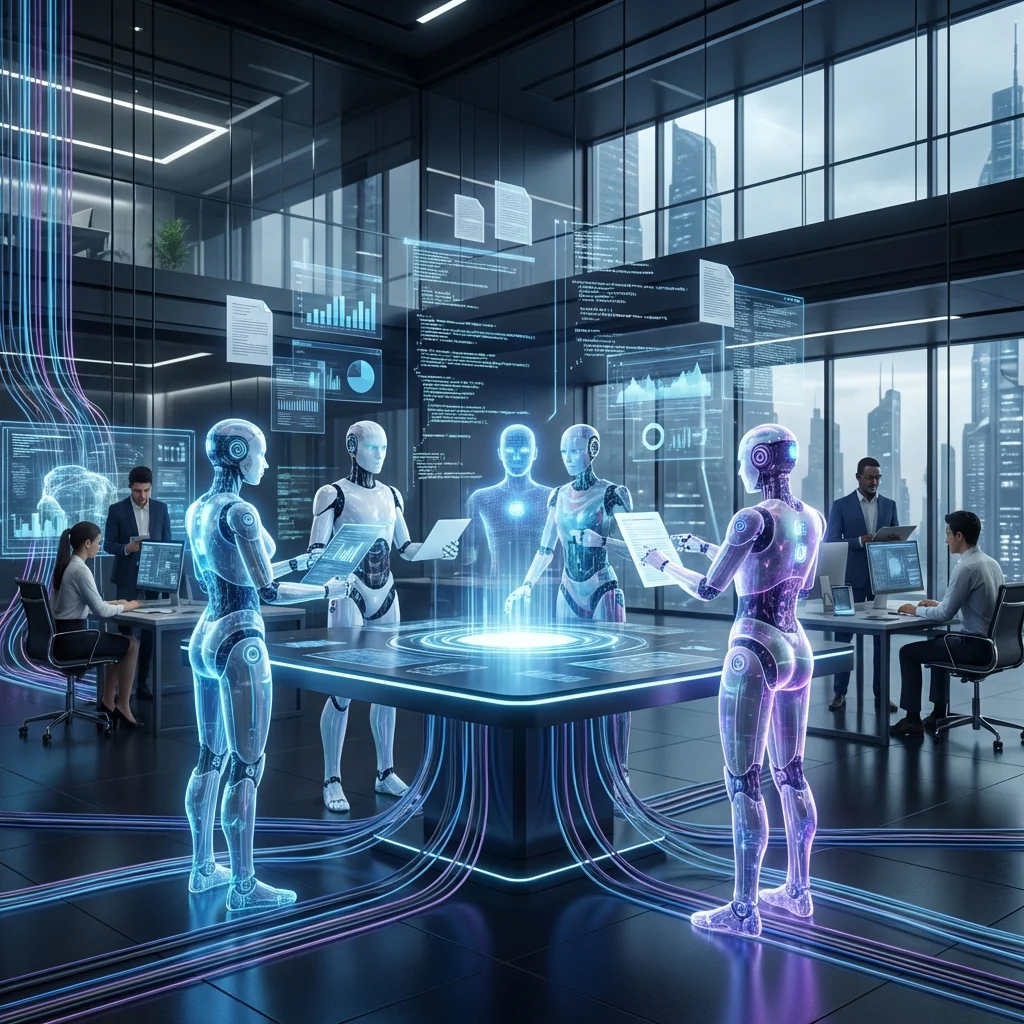
2026 is the year AI stops being a tool and starts being a teammate. The rise of agentic AI—AI systems that can reason, plan, and execute tasks autonomously—is transforming how we work, research, and build. This isn't science fiction. Gartner predicts that by the end of 2026, 40% of enterprise applications will incorporate purpose-built AI agents.
What Makes an AI "Agentic"?
Traditional AI responds to prompts. Agentic AI takes initiative:
| Traditional AI | Agentic AI |
|---|---|
| Answers questions | Plans and executes tasks |
| Waits for input | Acts proactively |
| Single-turn interactions | Multi-step workflows |
| Follows instructions | Makes decisions |
| Tool user | Autonomous actor |
The key distinction: agentic AI can reason about goals, adapt to outcomes, and learn from results without constant human direction.
The Numbers Behind the Shift
| Prediction | Source |
|---|---|
| 40% of enterprise apps will have AI agents by end of 2026 | Gartner |
| 15% of work decisions will be made autonomously by agents | Industry estimates |
| 10-15% of IT spending will go to agentic AI in 2026 | Market projections |
| 33% of enterprise software will feature agents by 2028 | Gartner |
This represents a fundamental restructuring of how software is built and work gets done.
Where AI Agents Are Taking Over
1. Scientific Research
AI agents are becoming lab assistants:
- Generate hypotheses from literature
- Design and propose experiments
- Run computational experiments autonomously
- Collaborate with human researchers
- Synthesize findings across papers
Microsoft's research suggests AI will "actively participate in discovery" across physics, chemistry, and biology.
2. Customer Service
24/7 intelligent support:
- Handle complex, multi-turn conversations
- Access customer history and context
- Escalate intelligently when needed
- Personalize responses in real-time
- Resolve issues without human intervention
3. Cybersecurity
Autonomous threat response:
- Continuous network monitoring
- Real-time anomaly detection
- Automatic remediation actions
- System isolation without waiting for humans
- Pattern recognition across attack vectors
4. Manufacturing & Logistics
Physical AI agents in action:
- Warehouse robots coordinating dynamically
- Production lines self-optimizing
- Quality control without human inspection
- Demand-responsive inventory management
- Autonomous vehicle fleets
5. Software Development
Code as conversation:
- Understand entire codebases
- Generate production-ready code
- Refactor and modernize legacy systems
- Run tests and fix bugs
- Deploy and monitor applications
Multi-Agent Systems: AI Teams
The frontier isn't single agents—it's swarms of specialized agents working together:
How Multi-Agent Systems Work
Orchestrator Agent
     ↓
┌────┴────┐────────┐
↓         ↓        ↓
Research  Code     Test
Agent     Agent    Agent
Each agent handles its specialty, coordinated by a higher-level orchestrator:
- Division of labor among specialized agents
- Communication protocols between agents
- Conflict resolution when agents disagree
- Hierarchical control for complex tasks
Real-World Examples
Moonshot AI's Kimi Agent Swarm: Coordinate up to 100 sub-agents for complex research and analysis tasks.
Enterprise Workflows: Multiple agents handling:
- Data gathering
- Analysis
- Report generation
- Distribution
- Feedback collection
The Democratization of Agent Development
Low-Code Platforms
Building AI agents no longer requires deep expertise:
- Visual agent builders
- Pre-built templates
- Drag-and-drop workflows
- Natural language configuration
This leads to:
- Faster development cycles
- Reduced costs for implementation
- Non-technical creators building agents
- Departmental agents without IT involvement
Agent Marketplaces
Expect to see:
- Pre-built agents for common tasks
- Industry-specific agent templates
- Agent customization services
- Agent performance benchmarks
The Infrastructure Challenge
Agentic AI demands new infrastructure:
Real-Time Data Pipelines
Agents need:
- Live data access
- Low-latency processing
- Consistent data models
- Cross-system integration
Aligned Ontologies
For agents to work together:
- Shared understanding of concepts
- Standardized data formats
- Common action frameworks
- Interoperable protocols
Agentic-Ready Computing
- Higher sustained compute demands
- Hybrid cloud/edge architectures
- Specialized agent hosting
- Monitoring and observability
Governance and Safety
With autonomy comes risk:
Human-in-the-Loop
Critical for:
- High-stakes decisions
- Irreversible actions
- Compliance-sensitive areas
- Edge cases and exceptions
Transparent Decision Logs
Agents must:
- Document their reasoning
- Explain their actions
- Enable audit trails
- Support compliance requirements
Fail-Safe Mechanisms
Protection against:
- Runaway behaviors
- Cascading errors
- Adversarial manipulation
- Unintended consequences
Security Vulnerabilities
New attack surfaces:
- Prompt injection on agents
- Agent impersonation
- Data poisoning
- Goal manipulation
Personal AI Agents
It's not just enterprise. Personal agents will:
Manage Your Digital Life
- Schedule meetings intelligently
- Rebook travel on disruptions
- Handle routine communications
- Organize files and information
Voice AI Gets Real
Voice-first agents emerging in:
- Healthcare (patient intake)
- Finance (account management)
- Recruiting (screening calls)
- Customer support (natural conversations)
The Personal Assistant Dream
The long-promised intelligent personal assistant is finally arriving:
- Understands your preferences deeply
- Acts on your behalf reliably
- Learns from your feedback
- Coordinates across services
Sovereign AI: National Agent Strategies
A surprising trend: sovereign AI initiatives:
| Region | Approach |
|---|---|
| EU | European AI sovereignty initiatives |
| UK | National AI programs |
| India | Domestic AI development focus |
| China | State-supported AI ecosystems |
Nations are investing in controlling their AI capabilities, not just consuming foreign models.
What This Means for Workers
Tasks That Shift to Agents
- Routine research
- Data entry and processing
- Scheduling and coordination
- First-draft content creation
- Monitoring and alerting
Skills That Become More Valuable
- Agent orchestration
- Problem definition
- Quality oversight
- Creative direction
- Exception handling
The New Collaboration Model
- Humans define goals
- Agents execute tasks
- Humans review outputs
- Agents learn and improve
- Humans handle exceptions
Getting Started with AI Agents
For Individuals
- Experiment with personal assistants (ChatGPT, Claude, Gemini)
- Identify repetitive tasks for delegation
- Test agent capabilities on low-stakes work
- Develop effective prompting strategies
For Teams
- Audit workflows for agent opportunities
- Pilot agents in specific use cases
- Measure impact on productivity and quality
- Scale successful implementations
For Organizations
- Strategy for agentic AI integration
- Infrastructure investment for agent support
- Governance frameworks for autonomous systems
- Training for human-agent collaboration
Conclusion
2026 marks the transition from AI as a tool to AI as a coworker. The agents arriving this year can plan, execute, and adapt—handling work that previously required human attention at every step.
The organizations that thrive will be those that learn to collaborate with these digital teammates, combining human judgment with agent capability. The question isn't whether to adopt AI agents—it's how quickly you can integrate them effectively.
Explore AI agent platforms from major providers and specialized agent development tools to get started.