AI TL;DR
Tesla's third-generation Optimus humanoid robot entered mass production in January 2026. Here's what makes it revolutionary and when you can buy one. This article explores key trends in AI, offering actionable insights and prompts to enhance your workflow. Read on to master these new tools.
Tesla's Robot Revolution Has Begun
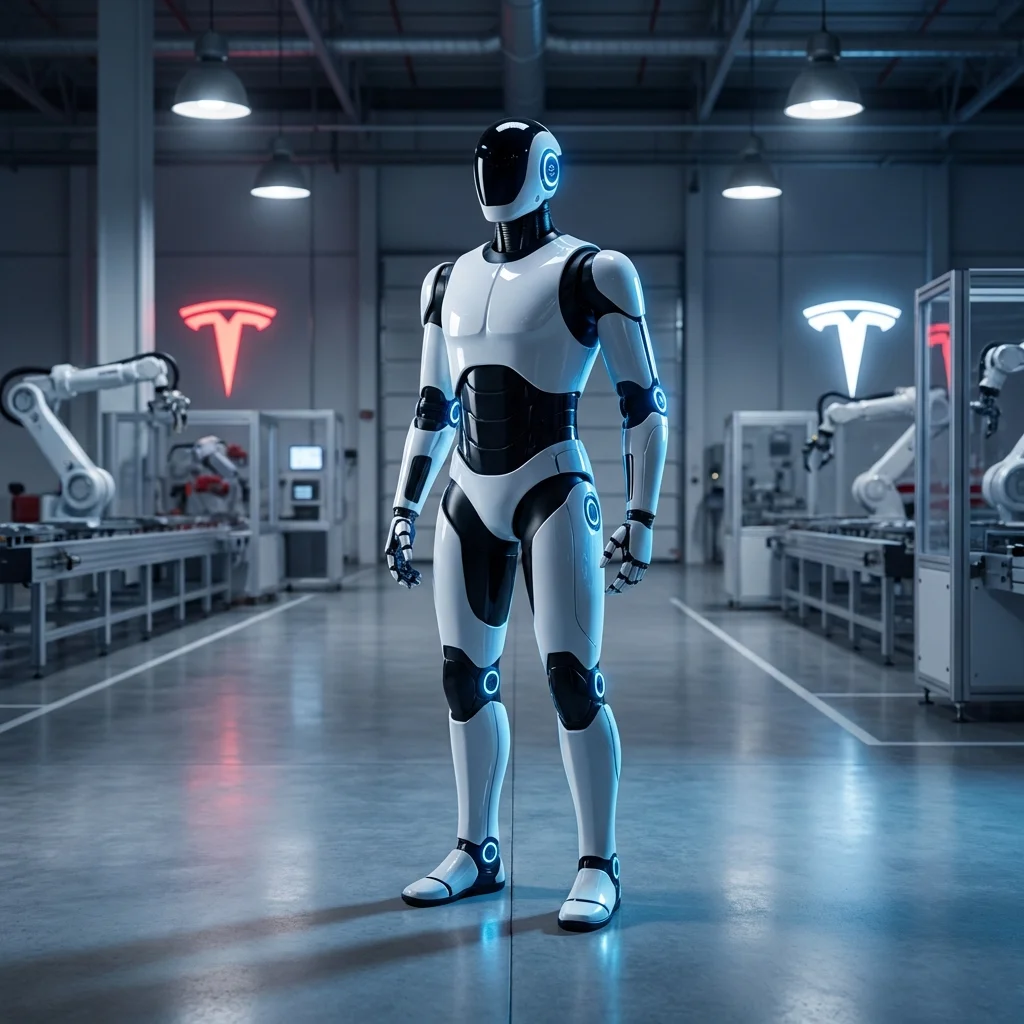
On January 21, 2026, Tesla officially began mass production of its Optimus Gen 3 humanoid robot at its Fremont factory in California. After years of prototype demonstrations and skepticism from critics, Elon Musk's vision of a general-purpose humanoid robot is finally becoming reality.
This isn't just another tech product launch—it's the beginning of what Musk calls Tesla's "biggest product ever," with implications that extend far beyond factory floors.
Optimus Gen 3: The Specifications
Physical Design
The third-generation Optimus is designed to be roughly human-sized:
| Specification | Value |
|---|---|
| Height | 1.70 meters (5'8") |
| Weight | 57 kg (125 lbs) |
| Battery | 2.3 kWh |
| Operating Time | 10-12 hours per charge |
| Hand Degrees of Freedom | 22 |
The "Robot Brain"
At the core of Optimus Gen 3 is a variation of Tesla's Full Self-Driving (FSD) computer. This same technology that powers Tesla's autonomous vehicles now enables the robot to:
- See: Eight cameras provide 360-degree vision
- Understand: Construct real-time 3D maps of its environment
- Learn: Simulate and imitate human workers to acquire new skills
The hands are particularly impressive, featuring 22 degrees of freedom driven by tendon-like cables. This enables human-like dexterity for handling various objects—from delicate components to heavy parts.
What Can Optimus Do?
Tesla engineers report that the Gen 3 platform can perform over 3,000 distinct tasks, including:
Industrial Applications
- Parts kitting on battery production lines
- Basic inspection and quality control
- Cleaning and maintenance tasks
- Material handling and logistics
Domestic Applications (Future)
- Household chores
- Elderly care assistance
- Personal assistance tasks
The robot learns through a combination of simulation and imitation. By observing human workers, Optimus can acquire new skills without explicit programming for each task.
Production and Pricing
Mass Production Strategy
Tesla is converting production lines at its Fremont factory—previously used for Model S and Model X vehicles—to focus on humanoid robot manufacturing. The company has established a completely separate supply chain from its automotive business, with every component redesigned from first principles.
Projected Costs
| Timeline | Estimated Price |
|---|---|
| Initial Production | Higher (limited volume) |
| Long-term Target | $20,000 - $30,000 per unit |
Availability
Elon Musk has estimated that Optimus robots could be available for public purchase by 2027. Initially, production will focus on internal Tesla use and select industrial partners.
Musk has cautioned that initial output will be "agonizingly slow" before scaling up, but the goal is ambitious: up to one million units per year from the Fremont facility alone.
The Vision Behind Optimus
More Than a Factory Helper
Elon Musk sees Optimus as far more than an industrial robot. In various statements, he has suggested that Optimus could:
- Become the first "Von Neumann machine" capable of self-replication
- Help build civilization on other planets
- Fundamentally transform the global economy
Mars Mission
In March 2025, Musk announced that an Optimus robot would be sent to Mars in 2026 aboard a SpaceX Starship rocket. The idea is that humanoid robots could perform dangerous or repetitive tasks in space exploration, preparing the way for human colonization.
The Competitive Landscape
Tesla isn't alone in the humanoid robot race. Major competitors include:
| Company | Robot | Status |
|---|---|---|
| Boston Dynamics | Atlas | Deployed at Hyundai plant |
| Figure AI | Figure 02 | Partnerships with BMW, OpenAI |
| Agility Robotics | Digit | Pilot deployments underway |
| DroidUp | Moya | Expected late 2026 |
| DOBOT | ATOM | Mass production started Feb 2026 |
However, Tesla's manufacturing expertise, vertical integration, and AI capabilities give it unique advantages in scaling production.
Why Humanoid Robots?
The Case for Human Form
Critics have questioned why robots need to be humanoid—after all, specialized industrial robots already exist. Tesla's answer centers on versatility:
-
Human-Designed World: Our factories, homes, and cities are built for human bodies. A humanoid form can navigate stairs, doorways, and workstations without modification.
-
Skill Transfer: Humanoid robots can learn by watching humans, making training easier than programming specialized movements for each robot type.
-
Flexibility: A single humanoid robot can perform thousands of different tasks, unlike specialized robots that excel at one thing.
Implications for the Future
Economic Impact
If Optimus achieves even a fraction of Musk's vision, the economic implications are staggering. A $20,000 robot that can work 10+ hours daily could transform:
- Manufacturing
- Logistics and warehousing
- Agriculture
- Healthcare
- Construction
Employment Concerns
The prospect of millions of humanoid robots naturally raises questions about job displacement. Musk has acknowledged this, suggesting that in a future with abundance created by robot labor, societies might implement universal basic income.
Safety and Ethics
As robots become more capable, questions about safety, autonomy, and human oversight become increasingly important. How much independence should a robot have? What happens when things go wrong?
What's Next for Tesla Robotics
2026 Milestones
- Scale up Fremont production
- Deploy Optimus throughout Tesla factories
- Send Optimus prototype to Mars on SpaceX Starship
- Expand industrial partnerships
2027 and Beyond
- Consumer availability (estimated)
- International production facilities
- Expanded capabilities and use cases
Key Takeaways
| Aspect | Detail |
|---|---|
| Production Start | January 21, 2026 |
| Location | Fremont, California |
| Target Price | $20,000-$30,000 |
| Capabilities | 3,000+ tasks |
| Consumer Availability | Estimated 2027 |
Conclusion
Tesla's Optimus Gen 3 represents a watershed moment in robotics. While humanoid robots have long been the stuff of science fiction, Tesla is now manufacturing them at scale, with ambitious plans to produce millions annually.
Whether Optimus will live up to Musk's grandest visions—self-replicating machines building Mars colonies—remains to be seen. But one thing is clear: the era of the general-purpose humanoid robot has officially begun.
Sources: Tesla, Gasgoo, CNEVPost, Teslarati, January-February 2026