AI TL;DR
The AI music industry is divided. Suno advocates for open downloads while Udio partnered with labels on restricted platforms. Here's what it means for creators.
The Great Divide in AI Music
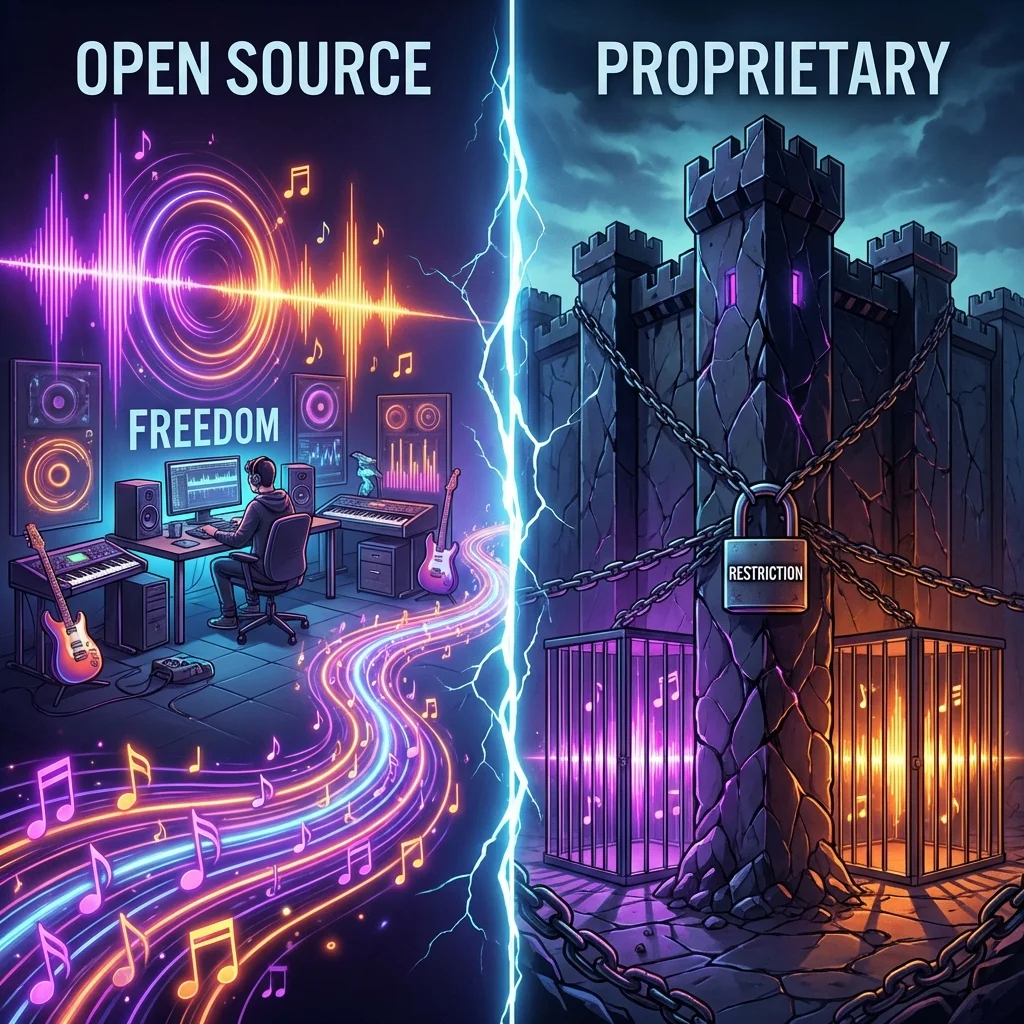
The AI music generation industry is at a crossroads. Two of the biggest players—Suno and Udio—have taken dramatically different paths in response to major label lawsuits. One champions "open studios" where creators can download and own their music. The other has embraced "walled gardens" where AI-generated tracks stay locked within platforms.
This isn't just a business decision. It's a philosophical battle over the future of AI creativity.
The Lawsuit That Started It All
In June 2024, the music industry's biggest names—Universal Music Group (UMG), Warner Music Group (WMG), and Sony Music, backed by the RIAA—filed copyright infringement lawsuits against both Suno and Udio.
The Accusation: Both AI companies allegedly used vast amounts of copyrighted music to train their AI models without authorization.
The Stakes: The labels sought substantial damages, potentially crippling both companies.
The Settlements: Two Very Different Outcomes
Udio's Walled Garden Deal
In October 2025, Udio settled with Universal Music Group. The terms were significant:
| Settlement Terms | Details |
|---|---|
| New Platform | Joint AI music platform launching in 2026 |
| Training Data | Exclusively licensed, authorized music |
| Download Policy | No downloads - music stays on platform |
| Revenue Sharing | Artists can opt-in to license work for AI |
Shortly after, WMG also settled with Udio in November 2025, implementing similar "walled garden" restrictions.
The Result: Udio disabled downloads for all users, providing only a 48-hour grace period to retrieve existing tracks.
Suno's Open Studio Philosophy
Suno took a different path. When WMG struck a separate deal with Suno in late 2025, the terms preserved key user-friendly features:
| Suno's Deal | What It Means |
|---|---|
| Downloads Allowed | Users can still download generated songs |
| Creation Freedom | Fewer restrictions on what users can create |
| Licensed Training | New models trained on WMG's catalog |
Paul Sinclair, Suno's Chief Music Officer, publicly criticized the walled garden model in February 2026, advocating for "open studios" that empower users to be creators, not just consumers.
Understanding the Walled Garden Debate
UMG's Argument: Protecting Artists
Universal Music Group defends the walled garden approach by arguing that unrestricted distribution could lead to "direct cannibalisation" of artists' original work. If anyone can create a song that sounds like Taylor Swift and distribute it freely, what happens to the original artist's value?
Suno's Counter: Empowering Creators
Suno's philosophy centers on democratizing music creation. Their argument: restricting AI music to locked platforms defeats the purpose of the technology. Users should be able to create, download, and use their AI-generated music freely—within licensed frameworks.
What This Means for Users
If You Use Udio
- No more downloads: Generated music stays on the platform
- New licensed platform coming: 2026 will bring a fully licensed experience
- Potential premium features: Licensed content may cost more
If You Use Suno
- Downloads still available: Export your creations
- New licensed models coming: Trained on WMG catalog in 2026
- Continued development: Suno remains focused on creator tools
The Ongoing Legal Battle
While Udio has settled with major labels, the legal landscape remains complex:
| Status | Companies |
|---|---|
| Settled | UMG + Udio, WMG + Udio, WMG + Suno |
| Ongoing Litigation | UMG + Suno, Sony Music + Suno |
The outcomes of remaining lawsuits could reshape the industry further.
New Players Entering the Arena
The AI music space is expanding beyond Suno and Udio:
Emerging Competitors
- Mureka AI (by Skywork AI): Comprehensive music generation platform
- ACE-Step v1.5: AMD's local AI music generation on Ryzen processors
- Nafy AI: Text-to-music and AI covers platform (launched Feb 2026)
Label Partnerships
- WMG + Stability AI: Developing responsible AI tools with ethically sourced training data
- Merlin + Multiple Platforms: Independent labels securing AI licensing agreements
The Philosophical Divide Explained
Walled Garden Model (Udio/UMG Approach)
Pros:
- Clear artist compensation structure
- Reduces copyright infringement concerns
- Labels maintain control over their catalogs
Cons:
- Limited user ownership
- Creativity confined to platforms
- May stifle innovation
Open Studio Model (Suno Approach)
Pros:
- User empowerment and ownership
- Greater creative freedom
- More accessible to independent creators
Cons:
- Harder to track usage and compensation
- Potential for misuse
- Complex licensing challenges
What 2026 Will Bring
Expected Launches
- Udio + UMG Platform: New licensed AI music service
- Suno Licensed Models: Trained on WMG catalog
- More Label Partnerships: Additional licensing agreements expected
Industry Predictions
- Hybrid models may emerge: Platforms offering both restricted and open tiers
- Artist opt-in systems: More sophisticated ways for artists to license their work
- AI detection technology: Better tools to identify AI-generated content
- New revenue models: Streaming royalties for AI-trained music
Making Your Choice: Suno or Udio?
| Factor | Suno | Udio |
|---|---|---|
| Downloads | ✅ Yes | ❌ No |
| Licensed Content | Coming 2026 | Coming 2026 |
| Label Partnerships | WMG | UMG, WMG |
| Philosophy | Open Studios | Walled Garden |
| Legal Status | Some litigation ongoing | Settled |
The Bigger Picture
This debate extends beyond music. It's about how AI-generated content should work across all creative industries:
- Should AI creations be freely downloadable?
- Who owns AI-generated content?
- How should original artists be compensated?
The music industry's answer to these questions will influence AI in art, writing, and video generation for years to come.
Conclusion
The Suno vs Udio divide represents two visions for AI creativity. One prioritizes platform control and artist protection through restrictions. The other champions user freedom and creative empowerment.
As a creator, your choice depends on what matters more to you: the security of a walled garden or the freedom of an open studio. Either way, 2026 will be a pivotal year for AI music, with new licensed platforms launching and the legal landscape continuing to evolve.
Sources: Music Business Worldwide, Music in Africa, Electronic Groove, February 2026