AI TL;DR
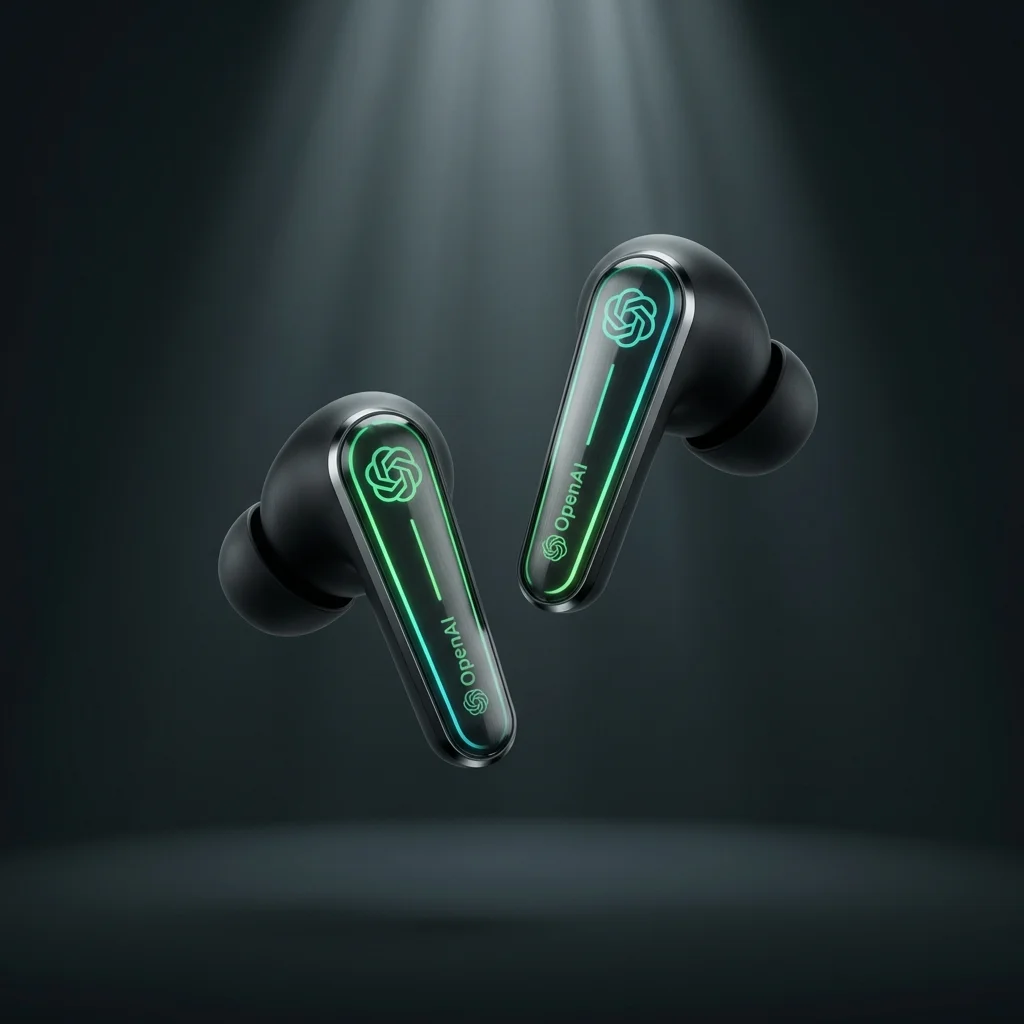
OpenAI is entering the hardware game with AI-powered earbuds. Codenamed 'Sweet Pea', here's everything we know about the device designed by Jony Ive. This article explores key trends in AI, offering actionable insights and prompts to enhance your workflow. Read on to master these new tools.
OpenAI's First Hardware Device: AI Earbuds Launching in 2026
OpenAI is making its boldest move yet—entering the hardware market.
At Davos this week, OpenAI's Chief Global Affairs Officer Chris Lehane confirmed the company is on track to announce its first hardware device in the second half of 2026.
And according to multiple leaks and reports, it's not a phone. It's not a pendant. It's AI-powered earbuds.
What We Know About "Sweet Pea"
The device is reportedly codenamed "Sweet Pea" and represents OpenAI's vision for a different kind of AI experience.
Key Details
| Feature | Details |
|---|---|
| Form Factor | Wireless earbuds with unique design |
| Processor | Custom 2-nanometer chip |
| AI Processing | On-device, not cloud-dependent |
| Manufacturing | Likely Foxconn (Taiwan) |
| Target Volume | 40-50 million units in Year 1 |
| Designer | Jony Ive (former Apple design chief) |
The Jony Ive Connection
This isn't just any tech company launching earbuds. OpenAI acquired Jony Ive's startup io in May 2025 for $6.5 billion. Ive, the legendary designer behind the iPhone, iMac, and AirPods, is now leading OpenAI's hardware design.
Sam Altman described the potential device as more "peaceful and calm" than iPhones—suggesting a screen-free, ambient AI experience.
Why Earbuds?
OpenAI's ChatGPT has nearly 1 billion weekly users, but the company relies entirely on other platforms (phones, browsers, apps) for distribution.
With its own device, OpenAI could:
- Control the experience — No dependence on iOS or Android
- Release exclusive features — Voice-first AI designed for the hardware
- Build a direct relationship — Own the customer, not rent them from Apple/Google
Earbuds make sense because:
- They're always with you
- Voice is the natural interface for AI
- They don't require a screen (Altman's "peaceful" vision)
- The market is massive (AirPods alone do $20B+ annually)
The Technical Edge
What makes these earbuds different from Bluetooth earbuds with a voice assistant?
On-device AI processing.
The reported 2nm custom chip would allow the earbuds to run AI locally, meaning:
- Lower latency (no waiting for cloud responses)
- Better privacy (data stays on device)
- Works offline
- More responsive, natural conversations
This is the same direction Apple is heading with Apple Intelligence—but OpenAI would be first with truly AI-native hardware.
Competition and Challenges
OpenAI faces significant headwinds:
The Hardware Graveyard
AI hardware has a poor track record:
- Humane AI Pin — Sold to HP after struggling
- Rabbit R1 — Still "chugging along" after 2024 hype
- Friend AI Pendant — Backlash for marketing tactics
Platform Lock-in
AirPods work seamlessly with iPhones. Pixel Buds integrate perfectly with Android. OpenAI's earbuds would need to work well across platforms—or convince users to make them primary.
Big Tech Competition
- Meta Ray-Ban glasses — Can't keep up with demand
- Amazon Bee — AI meeting recorder it recently acquired
- Apple AirPods — The incumbent king of wireless audio
What This Means for Users
If OpenAI succeeds, imagine this:
- Ask questions without pulling out your phone
- Get summaries of meetings, articles, or conversations in real-time
- Translate languages live while traveling
- Take notes by just speaking
- Have a thinking partner always available
The earbuds could be the first truly ambient AI device—one that enhances your life without demanding your attention.
When Can You Buy Them?
Based on Lehane's Davos comments, expect an announcement in H2 2026 (July–December).
Actual availability might be late 2026 or early 2027, with manufacturing ramped up through Foxconn.
We'll update this article as more details emerge.
The Bottom Line
OpenAI entering hardware is a big deal. With Jony Ive leading design, a custom AI chip, and nearly 1 billion existing users, they have the ingredients for success.
But as Humane and Rabbit learned, good ideas don't guarantee good products. The execution will matter.
If they pull it off, Sweet Pea could be the first AI device that actually fits into our lives—not as a novelty, but as something we reach for every day.
Watch this space.