AI TL;DR
Google DeepMind's CEO rejects ChatGPT's ad approach. Here's why Gemini is staying ad-free and what it says about AI's future. This article explores key trends in AI, offering actionable insights and prompts to enhance your workflow. Read on to master these new tools.
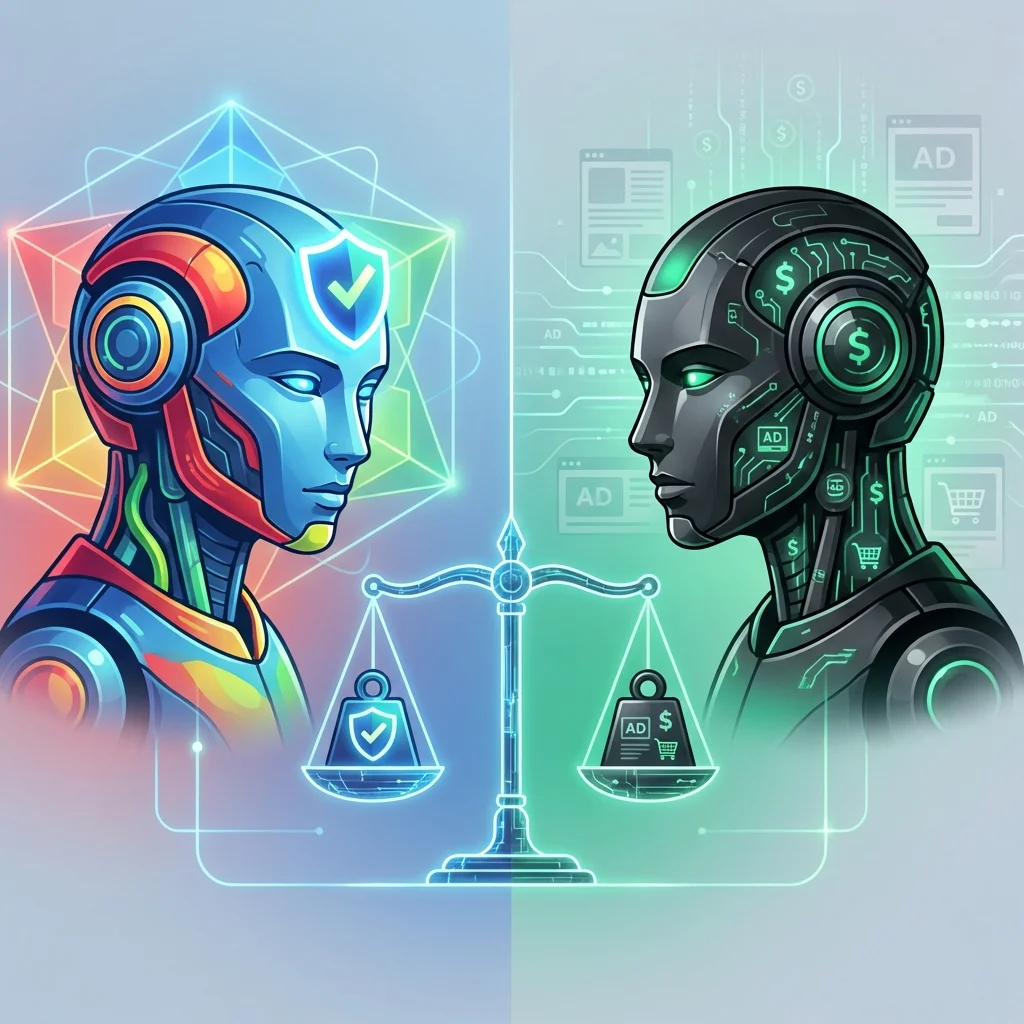
Demis Hassabis: "No Ads in Gemini" - Google vs OpenAI Philosophy
OpenAI is putting ads in ChatGPT.
Google could easily do the same—they invented modern digital advertising. But Demis Hassabis, CEO of Google DeepMind, says Gemini will stay ad-free.
Here's why that matters.
The Statements
Hassabis on Gemini
In January 2026, Hassabis was clear:
"No plans" for ads in Gemini "for the foreseeable future"
His focus: user trust and core assistant quality.
This was reinforced by Dan Taylor (Google Ads president) in December 2025, who confirmed ads won't come to the Gemini app in 2026.
Hassabis on ChatGPT Ads
When asked about OpenAI's decision, Hassabis called it "interesting" and implied it might stem from revenue pressure rather than long-term strategy.
Read: he thinks it's a mistake.
The ChatGPT Ad Plan
What OpenAI Is Doing
| Detail | Info |
|---|---|
| When | Testing began January 2026 |
| Where | US first, then global |
| Which tiers | Free and Go ($8) |
| Format | Labeled ads below responses |
| Ad-free tiers | Plus ($20), Pro ($200), Business, Enterprise |
OpenAI's Reasoning
OpenAI says:
- Ads support making AI "accessible"
- Conversations remain private from advertisers
- Ads won't influence responses
- Users can opt out of personalization
Why Google Is Different
The Obvious Paradox
Google is the world's largest digital advertising company. They make $200B+ annually from ads.
So why not put ads in Gemini?
Hassabis's Logic
His concern: poor ad implementation could diminish user trust.
Translation: if your AI assistant feels like a billboard, users will leave.
The Long Game
Google can afford to lose short-term AI revenue because:
- They have massive ad revenue elsewhere
- Gemini's value is in Google ecosystem lock-in
- User trust matters more than quick monetization
- They're playing for 10+ year timeline
Different Financial Pressures
OpenAI's Situation
| Challenge | Details |
|---|---|
| Raised | $64B+ from investors |
| Users | 800M+ weekly actives |
| Paying users | Much smaller number |
| Costs | Massive compute infrastructure |
| Revenue | Fraction of what they've raised |
OpenAI needs to show a path to profitability. Ads are one obvious answer.
Google's Situation
| Advantage | Details |
|---|---|
| Revenue | $200B+ annually (ads) |
| Cash | Effectively unlimited |
| Patience | Can wait years for AI returns |
| Integration | Gemini drives other Google revenue |
Google doesn't need Gemini to make money directly.
The Philosophical Split
OpenAI's Approach
- Monetize users directly (subscriptions + ads)
- Rapid revenue diversification
- Responds to investor pressure
- Risk: degrading user experience
Google's Approach
- AI as ecosystem driver
- Long-term trust building
- Monetization through integration
- Risk: losing to more aggressive competitors
Neither Is "Right"
Both are valid business strategies. The question is which produces better AI products long-term.
What This Means For Users
If You Prefer Ad-Free
Options without (current) ads:
- Gemini Pro (Google)
- Claude (Anthropic)
- ChatGPT Plus/Pro (OpenAI paid tiers)
- Local models (Llama, etc.)
If You're OK With Ads
ChatGPT free and Go tiers remain functional. The ads are:
- Labeled separately from responses
- Based on conversation context
- Not shown for sensitive topics
The Enshittification Question
The Pattern
Every beloved internet product has followed a similar arc:
- Build user base with great free product
- Introduce monetization gradually
- Increase ad load over time
- Experience degrades for non-paying users
Will ChatGPT Follow?
OpenAI promises "not this time."
But so did:
- Google Search
- Facebook/Instagram
- YouTube
- Every other ad-supported product
The structural incentives don't change just because the company says they will.
Our Take
Hassabis is making a bet: in AI, trust trumps short-term revenue.
Whether he's right depends on:
- How intrusive ChatGPT ads actually become
- Whether users care enough to switch
- How competitive Gemini becomes vs ChatGPT
For now, users win. Having choice between ad-supported (ChatGPT free) and ad-free (Gemini, Claude, paid ChatGPT) is healthy for the market.
The concerning scenario is if all AI providers eventually introduce ads. That's when users lose.
Watch this space as the monetization race evolves.
Do you care about ads in AI assistants? Would you switch to avoid them?