AI TL;DR
Anthropic's new legal plugin for Claude Cowork can review contracts, flag risks, and draft documents. Here's what it means for the legal industry. This article explores key trends in AI, offering actionable insights and prompts to enhance your workflow. Read on to master these new tools.
Claude Legal Automation Plugin: AI Is Coming for Contract Review
Lawyers, pay attention.
Anthropic has released a legal automation plugin for Claude Cowork that can review contracts, flag risks, and draft legal documents—tasks that traditionally bill at $300-500/hour.
The legal tech industry is already feeling the impact, with traditional players seeing stock declines since the announcement.
Here's what it does and why it matters.
What is the Claude Legal Plugin?
The plugin extends Claude Cowork's capabilities specifically for legal workflows:
- Contract Review - Flag risks, missing provisions, inconsistencies
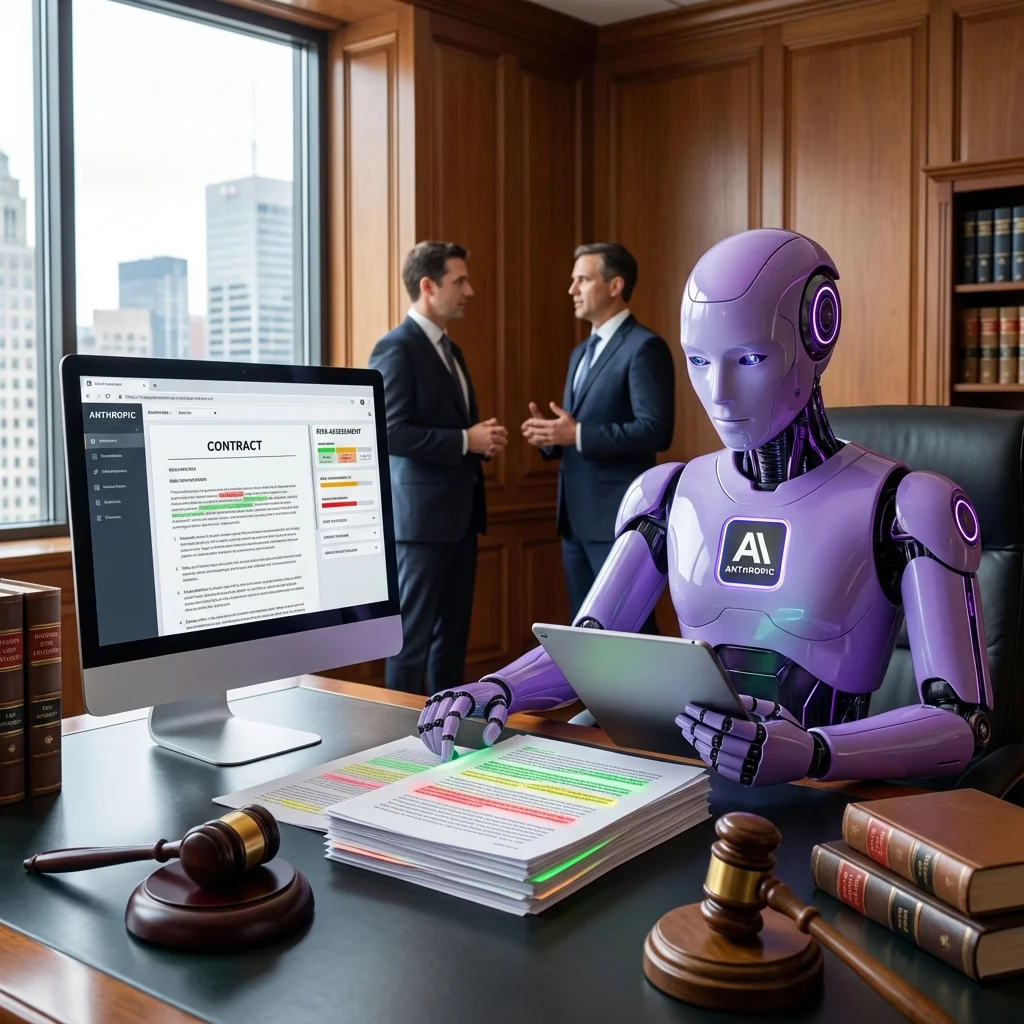
- Risk Assessment - Red/Yellow/Green classification
- Redlining - Suggest edits with tracked changes
- Document Summarization - Extract key terms and obligations
- Playbook Compliance - Check against standard terms
- Drafting Support - Generate legal content
All outputs require attorney review—Anthropic isn't positioning this as lawyer replacement, but lawyer augmentation.
Key Features
1. Critical Terms Identification
Claude scans contracts to identify:
- Risk provisions - Liability caps, indemnification
- Missing clauses - Standard terms that should be present
- Inconsistencies - Conflicting terms between sections
- Unusual language - Deviations from standard practices
2. Risk Traffic Light System
| Color | Meaning |
|---|---|
| 🟢 Green | Standard, acceptable |
| 🟡 Yellow | Review recommended |
| 🔴 Red | Requires attorney attention |
This lets lawyers focus on what matters instead of reading everything.
3. Automated Redlining
The plugin can:
- Suggest edits for problematic language
- Generate track-changes versions
- Add comments for discussion points
- Prepare negotiation positions
4. Playbook Integration
Upload your firm's or company's legal playbook, and Claude will:
- Check contracts against your standards
- Generate deviation matrices
- Highlight where terms differ from your preferred position
- Suggest your standard language as alternatives
5. Agentic NDA Triage
For in-house teams, the plugin can:
- Auto-triage incoming NDAs
- Route to appropriate reviewers
- Handle standard agreements with minimal intervention
- Escalate only unusual terms
How It Works
Setup
- Access Claude Cowork (requires paid Claude plan)
- Enable the legal automation plugin
- Configure your playbooks and preferences
- Upload documents
Review Workflow
Upload Contract
      ↓
Claude analyzes full document
      ↓
Generates risk summary
      ↓
Flags critical issues (Red/Yellow/Green)
      ↓
Suggests redlines
      ↓
Attorney reviews and approves
Available Now
- ✅ Paid Claude users (research preview)
- ✅ Open-source and customizable
- 🔜 Organizational/enterprise support
What It Can Review
| Document Type | Capability |
|---|---|
| NDAs | ⭐⭐⭐⭐⭐ |
| Employment contracts | ⭐⭐⭐⭐⭐ |
| SaaS agreements | ⭐⭐⭐⭐ |
| Purchase agreements | ⭐⭐⭐⭐ |
| Lease agreements | ⭐⭐⭐⭐ |
| M&A documents | ⭐⭐⭐ |
| Regulatory filings | ⭐⭐⭐ |
Complex, highly specialized documents still need more human involvement.
Industry Impact
Legal Tech Stock Impact
The announcement reportedly caused stock declines for traditional legal data and software companies. This signals the market's concern about AI disruption in legal services.
Time Savings
| Task | Traditional | With Claude | Savings |
|---|---|---|---|
| NDA review | 30-60 min | 5-10 min | 80%+ |
| Contract summary | 1-2 hours | 5 min | 90%+ |
| Risk assessment | 2-4 hours | 15 min | 90%+ |
| First-pass redline | 2-3 hours | 10-15 min | 85%+ |
Cost Implications
If an associate bills $350/hour and reviews 5 contracts/week:
- Traditional: ~$3,500/week per associate
- AI-assisted: ~$700/week (attorney review only)
- Potential savings: $2,800/week
Over a year, one attorney could perform the first-pass work of 4-5.
Limitations
What It Can't Do
- Replace attorney judgment
- Handle novel legal issues
- Negotiate with opposing counsel
- Provide legal advice
- Make final decisions
Require Human Review
Anthropic explicitly states all outputs need attorney verification. This isn't about replacing lawyers—it's about making them more efficient.
Accuracy Concerns
Like all AI, hallucinations are possible. Critical legal decisions should never rely solely on AI analysis.
Comparison with Competitors
| Feature | Claude Legal | Harvey AI | Casetext | Contract AI |
|---|---|---|---|---|
| Contract review | ⭐⭐⭐⭐⭐ | ⭐⭐⭐⭐⭐ | ⭐⭐⭐⭐ | ⭐⭐⭐⭐ |
| Risk flagging | ⭐⭐⭐⭐⭐ | ⭐⭐⭐⭐ | ⭐⭐⭐ | ⭐⭐⭐⭐ |
| Playbook integration | ⭐⭐⭐⭐⭐ | ⭐⭐⭐⭐ | ⭐⭐⭐ | ⭐⭐⭐⭐ |
| Open-source | ✅ | ❌ | ❌ | ❌ |
| Price accessibility | 🏆 | $$$ | $$ | $$ |
Claude's combination of capability and accessibility makes it compelling for smaller firms and in-house teams.
Who Should Use It?
Ideal For:
- In-house legal teams - High volume, routine contracts
- Solo practitioners - Productivity boost
- Small/mid firms - Cost-effective first pass
- Startups - Review agreements without huge legal budgets
Maybe Not For:
- High-stakes litigation - Needs specialized tools
- Complex M&A - Requires deal-specific expertise
- Regulatory work - Highly specialized requirements
The Future of Legal AI
This plugin is likely just the beginning. Expected future capabilities:
- Deposition preparation assistance
- Brief drafting support
- Legal research integration
- Court filing automation
- Discovery review at scale
The legal industry is being transformed—not replaced, but fundamentally changed.
The Verdict
Anthropic's legal plugin is a genuine productivity multiplier for legal work.
| ✅ Pros | ❌ Cons |
|---|---|
| Dramatic time savings | Still requires attorney review |
| Accessible pricing | May miss nuanced issues |
| Customizable playbooks | New tool learning curve |
| Open-source | Not for complex transactions |
Rating: 4.3/5
For routine contract review, this could be transformative. For complex legal work, it's a useful assistant but not a replacement.
The question isn't "Will AI replace lawyers?" It's "How will lawyers who use AI outperform those who don't?"
Related Articles: